This Week in Midweek Updates
Aero Club Communique #21 of 2026.
Venerable C-130BZ Hercules fills core role in Western Cape SAR training camp.
SAAF navigator wings course 72 takes on - and wins - medium level VFR challenge.
Boeing: Africa's airplane fleet will more than double by 2045 to meet rising air travel demand.
GAMA Releases Second Quarter 2026 Aircraft Shipment and Billing Report.
Chinese UCAVs at Chadian military base apparently being prepared for service.
European approval for production Organisation PAL-V.
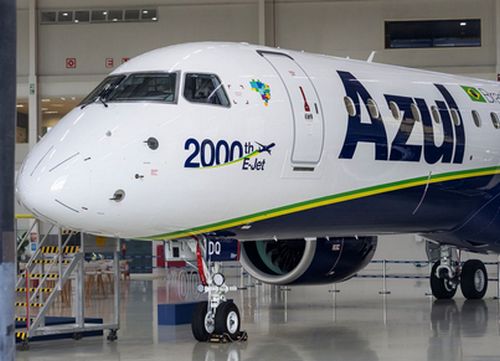
Embraer celebrates the delivery of the 2,000th E-Jet, a milestone that places the program among the world's top 3.
This week in history - Viktor Belenko successfully defected to the West by flying his MiG-25 jet fighter to Hakodate Airport in Japan.
Worldwide Incidents and Accidents
Bonus video - Aerobatics SAC Judges Trophy 2024 Heidelberg Airfield
Aero Club Communique #21 of 2026
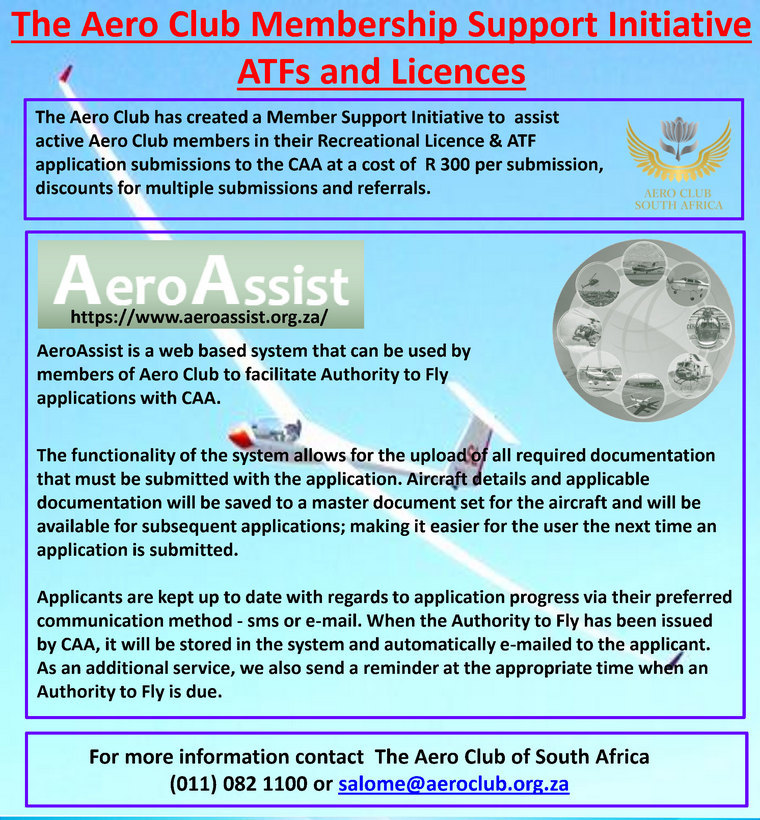
Good day to all our Aero Club members, and to all of the general and recreational aviation community. We bring you news of how the Aero Club's Aero Assist programme will be able to help with renewals of Certificates of Airworthiness and Authorities to Fly.
Spring is here and the weather for flying is much better. September is also traditionally the month when we have a number of recreational and other aviation events taking place. There is news in this edition about some great events.
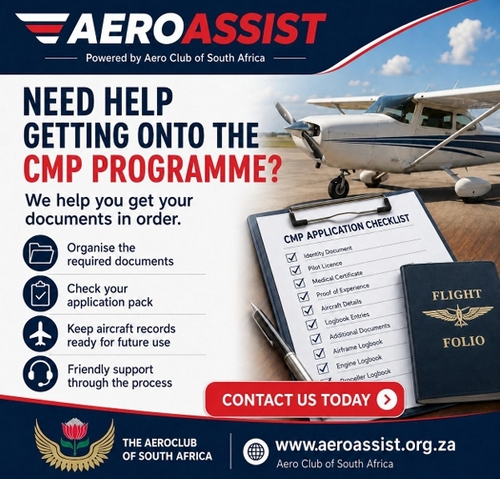
Aero Assist The Aero Club's Aero Assist programme is designed to ease the work involved with the submission of applications for ATFs and CofAs. We can now also assist with applications for ATFs and CofAs for aircraft that need to be inspected in terms of the Condition Monitoring Programme as determined in terms of the recent General Notice published by the SACAA.
Our Aero Assist system is supported by an online document capture capability. We submit all your forms and supporting documents to the CAA. Regular follow-ups are done to ensure effective and timeous completion of the applications.
Please contact us if you need more information.
See below for more information and the contact detail.
Upcoming Events
In the next few months, there is a lot to look forward to. There is a “menu” of events to choose from that should suit all recreational aviation enthusiasts.
Here is information on some of the planned events.
Experimental Aircraft Association - Sun 'n Fun The yearly EAA Sun 'n Fun to be held at the Krugersdorp airfield from 24 to 27 September 2026 promises to be a super event with informative talks and the launch of the Aviation Youth Development initiative.
Apart from good information Sun 'n Fun will, as the name says, also be a lot of fun.
Please register for Sun 'n Fun at https://forms.gle/HNXTXa6LnHaWWrRDA
S A Power Flying Association - Flyfest SAPFA are hosting FlyFest at Brits airfield on 10 to 11 October 2026. This is in celebration of the first ever International Day of Air Sports, launched by the FAI. Saturday will be all about showcasing air sports of any kind, all AROs welcome and we encourage anyone who is curious to fly in or drive in and find out what it's all about. Sunday SAPFA will host a mini rally for anyone wanting to try their first competition. Apart from this being a celebration of Air Sports the mini rally is a great test of piloting and navigational skills.
Africa Aerospace and Defence Expo - AAD 2026. The biennial AAD Expo is at Waterkloof from 16 to 20 September 2026. This is Africa's premiere defence and trade aviation expo. But it also offers a lot to the general aviation community. And there is an air show to look forward to as well.
Please access the website for all information and to get tickets to the air show at www.aadexpo.co.za
Contact detail is: +27 84 840 3214 | admin@aadexpo.co.za
Please support the events. Fly safe and enjoy the coming of summer. See information below on Aero Club membership renewal and safety contact detail.
Have a good week,
Regards,
Walter Doubell,
Chairman, Aero club of SA,
4 September 2026, walter@aeroclub.org.za
0798306452
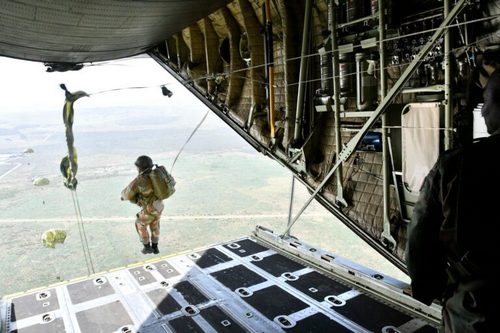
Venerable C-130BZ Hercules Fills Core Role in Western Cape SAR Training Camp www.defenceweb.co.za . Picture: Sergeant Gordon Smith, 28 Squadron.
The lone airworthy C-130BZ Hercules on the 28 Squadron asset register showed it's still up to the task during a two-week search and rescue (SAR) training camp at Langebaanweg, just short of 680 nautical miles from its Air Force Base (AFB) Waterkloof home.
The training camp used Air Force Base (AFB) Langebaanweg as its headquarters and base of operations showing, according to lieutenant colonels AL Olinsky and VJ Starke, the SA National Defence Force (SANDF) - specifically its airborne service - still has the professionalism, commitment and willingness to prepare for the mission of saving lives. This extends to the SA Navy (SAN) and 4 Special Forces Regiment, as other military elements activated for the camp and from the civilian side the National Sea Rescue Institute (NSRI) and the Maritime Rescue Co-ordination Centre (MRCC) of the national Department of Transport.
The C-130BZ Hercules (401) was the training camp's airborne hub and was the platform around which all involved integrated their specific SAR capabilities during the 16-29 August camp. The venerable C-130BZ has notched up sixty-plus years in South African Air Force (SAAF) service as a versatile medium transport recognised for tactical airlift and strategic capabilities. Missions successfully completed include humanitarian and supply operations, medical evacuation, paratrooping and SAR.
The co-operation shown in the training camp was noted as a significant achievement. The MRCC presence added experience from an organisation operating in the demanding maritime rescue and emergency response environment. Its Emergency Operations Centre is a communications and co-ordination point in broader emergency networks, including the SA Navy, NSRI and other emergency services in the provincial and local government sectors. The SA Navy and NSRI participation strengthened the maritime dimension of the training, the SAAF reported, noting maritime SAR requires co-ordinated employment of aircraft and surface assets, often over significant distances and in challenging environmental conditions.
Langebaan-based 4 Special Forces Regiment added specialised capability and experience to the training camp. In summary, the combination of organisations taking part showed effective national capability is strengthened when specialised organisations train together and understand how their respective capabilities can complement one another, 28 Squadron reported.
The SAR training camp goes down as more than training - it was a demonstration of commitment and willingness from South African military personnel and rescue professionals to continue developing their skills to serve the people of South Africa. This is further embodied by it being an investment in preparedness, an investment in people, an investment in co-operation and ultimately, an investment in the ability to save lives, the SAAF said.
The Air Force is expecting another C-130BZ to rejoin the fleet after maintenance work by Marshall Aerospace in the United Kingdom. The aircraft, tail number 409, exited South Africa in August 2023 bound for the United Kingdom for what was at the time estimated to be an 18-month maintenance period.
Expected date of completion of work and delivery was around mid-2026, but it is not clear when the aircraft will return. Once back in South Africa the four-engined workhorse, in addition to other new equipment, will have an ADS-B (Automatic Dependent Surveillance-Broadcast) system making it South African Civil Aviation Authority (SACAA) compliant. The aircraft's outdated secondary flight display (SFD) system was also to be upgraded.
The maintenance and upgrade spend of R1 billion in ring-fenced funding on SAAF medium lift capacity was approved by National Treasury (NT) in the 2023/24 financial reporting period. The money will go to upgrading the remaining six 60-year-old plus Lockheed Martin-built aircraft still in SAAF service. The SAAF originally had nine serviceable C-130s. Two were written off following what are termed “accidents” with another cannibalised for parts.
Marshall Aerospace in the early 2000s worked on the SAAF Hercules fleet under Project Ebb, among others fitting digital avionics, giving the aircraft so-called “glass cockpits”. Marshall Aerospace added a digital autopilot, flight displays, a navigation systems upgrade, communications and self-defence integration and enhancements to the electrical generation system. Three aircraft were upgraded in the UK and the remaining six in South Africa by Denel. Since the completion of these upgrades, in-country maintenance of the fleet has been performed by Denel.
Fully upgrading and maintaining all six remaining C-130s will cost just over R4 billion but it's not clear how or if this will be funded.
According to African Defence Review Director Darren Olivier, the SAAF C-130BZs in the fleet that can be made airworthy are: 401, 402, 405, 406, 408, and 409. Once 409 returns from the UK, 405 was scheduled to be flown to Marshall for its own upgrade and service, but the status of the upgrade is now unclear.
SAAF Navigator Wings Course 72 Takes On - and Wins - Medium Level VFR Challenge www.defenceweb.co.za
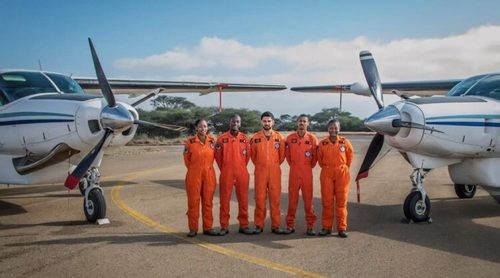
Swapping Air Force Base (AFB) Ysterplaat for the AFB Makhado - the Limpopo base regarded as “fighter town” in the SA Air Force (SAAF) - was no insurmountable challenge for five navigators in training.
The five - all candidate officers - are SN Nyanda, M Silima, GN Tshamano, S Ibrahim and TN Kamolane. They are enrolled at 80 Air Navigation School at the SAAF Cape Town base as Navigator Wings Course 72 with their “sortie” to the most northern province in South Africa starting them on the flying phase - medium level visual flight rules (VFR navigation) - of the course. Candidate officer Given Tshamano reports the excursion to the home of 2 Squadron and 85 Combat Flying School (CFS) was “a fundamental component of their training to become skilled and competent navigators”.
Each student undertook and completed five sorties, developing navigation accuracy, situational awareness and cockpit workload management under VFR conditions. The fifth sortie served as the formal assessment with all five students passing and demonstrating competence and readiness ahead of the next stage of training.
In addition to the formal assessment, each student successfully completed a solo sortie, marking a significant milestone. The achievement confirmed growing confidence, competence and mastery of the medium level VFR navigation skills required of navigators.
The flying phase, Tshamano reported, not only tested and developed navigation skills but also reinforced the importance of teamwork, discipline and perseverance - qualities essential to their future roles in the SAAF.
Contributing to the success of the VFR training can best be described as a SAAF team effort with AFB Makhado, AFB Ysterplaat photo section and AFB Waterkloof-based 41 Squadron in the form of two Cessna 208 Caravans with air and ground crews all making it a good start for the next crop of SAAF navigators.
SAAF training is also working on developing another batch of pilots. Late last year the ten-strong Pilots Wings Course 130 recorded their first solo flights on the PC-7 Mk II turboprop at AFB Langebaanweg. Langebaanweg is the primary training base for SA Air Force pilots who go on to specialise in either the helicopter, jet or transport lines after earning their wings.
The first flight and solo achievements, according to the SAAF, came in the face of “challenges” ranging from aircraft serviceability, resource constraints, bad weather and instructor shortages. “The course typically doesn't take this long, but the students adapted to the unique circumstances,” the SAAF reported.
Boeing: Africa's Airplane Fleet will More than Double by 2045 to Meet Rising Air Travel Demand
Africa's young, increasingly urban population, growing middle class and improving infrastructure will drive passenger traffic to grow nearly 6% annually through 2045, one of the fastest rates globally, Boeing [NYSE: BA] said today. The region's commercial airplane fleet will more than double from 755 to 1,625 over the next 20 years to support this demand, as projected in Boeing's 2026 Commercial Market Outlook (CMO) for Africa.
Of the nearly 1,200 newly delivered airplanes expected by 2045, 870 will be single-aisle jets to support expanding domestic and regional networks.
Demand for widebody airplanes will more than double, supporting fleet modernization and long-haul network growth. Boeing also forecasts that the cargo fleet will grow from 60 to 150 freighters as the continent's logistics, e-commerce and high-value export markets develop.
Intra-African passenger traffic is expected to grow at a faster pace than the regional average, enabled by better flight connections. Europe remains the largest international passenger market for flights to and from Africa and is forecast to remain so through 2045. This is driven by expanding economic ties, enduring cultural and family connections, and rising tourism investment.
“Africa's aviation market is entering a period of sustained growth driven by improving connectivity, expanding intraregional travel and deeper economic ties across the continent and with key global markets. Meeting this demand will require a broader commitment to fleet modernization, expanded capacity, digital solutions and workforce development," said Shahab Matin, Boeing managing director of Commercial Marketing. "The opportunity extends well beyond airplanes. It will require investment in affordable access, and the people who will support a larger fleet."
The expansion of Africa's aviation ecosystem will create growing demand for services and skilled personnel through 2045. Boeing's Commercial Services Market Outlook forecasts a $140 billion market for maintenance, repair, overhaul and modifications (MRO), digital solutions.
Boeing's Pilot and Technician Outlook forecasts that as airlines grow their fleets and expand route networks, they will need 75,000 new aviation professionals: 22,000 pilots, 25,000 technicians and 28,000 cabin crew.
GAMA Releases Second Quarter 2026 Aircraft Shipment and Billing Report
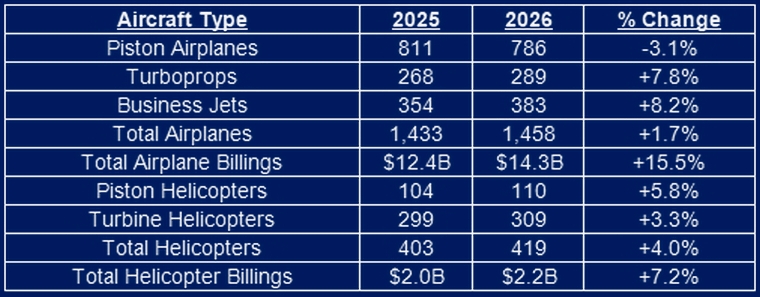
The General Aviation Manufacturers Association (GAMA) recently published the Second Quarter 2026 General Aviation Aircraft Shipment and Billing Report. The results for the first six months of 2026, when compared to the same period in 2025, show increased overall shipments and an increase in the value of aircraft billings.
Aircraft shipments through the second quarter of 2026, when compared to the same period in 2025, saw piston airplanes decrease by 3.1% with 786 units, turboprops increase 7.8% with 289 units, and business jets increase 8.2% with 383 units. The billings for airplanes through the second quarter of 2026 was $14.3 billion, an increase of 15.5%.
Helicopter shipments through the second quarter of 2026, when compared to the same period in 2025, saw piston helicopters increase by 5.8% with 110 units, and turbine helicopters increase by 3.3% with 309 units. The billings for civil-commercial helicopters was $2.2 billion.
GAMA's complete 2026 second quarter report can be found at gama.aero.
GAMA's complete 2026 second quarter report can be found at www.gama.aero .
Chinese Ucavs at Chadian Military Base Apparently Being Prepared for Service
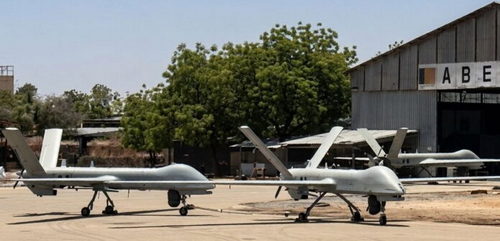
Landlocked Chad has seemingly added at least four Chinese Caihong-4 (CH-4) unmanned combat aerial vehicles (UCAVs) to its air power inventory.
Footage taken at the Chadian Abéché Air Base, in the capital city of the country's Ouaddaï region, 750 km north-east of N'Djamena, show four airframes parked on an apron alongside ground support equipment. The International Defence Analysis publication reports the new acquisitions, seen in mid-August, have not been formally announced by President Mahamat Déby. It reports further the presence of multiple fully assembled aircraft confirms deliveries have taken place and operational integration is actively underway.
Developed and built by the CASC (China Aerospace Science and Technology Corporation), the CH-4 was introduced in 2011 and has been in Chinese military service since 2014. The aircraft has a maximum take-off weight of 1 330 kg and a payload of 345 kg in addition to its electro-optical turret and synthetic aperture radar. The CH-4 has a wingspan of 18 metres and length of 8.5 metres. It is powered by a 100 hp class piston engine giving a top speed of 235 km/h and cruise speed of 180 km/h with endurance of up to 40 hours. It can carry a varied armament including cluster bombs, guided bombs and missiles such as the AR-1.
The CH-4 has been acquired by Algeria, the Democratic Republic of Congo, Jordan, Iraq, Indonesia, Nigeria, Pakistan, and Saudi Arabia.
Groupe ADIT last year reported the sale of 282 Chinese UAVs, quoting the Stockholm International Peace Research Institute (SIPRI) which calls the UAVs combat drones, with African countries in the forefront. Over the last several years Algeria, Democratic Republic of Congo (DRC), Egypt, Ethiopia, Nigeria added UAVs to their military arsenals.
On the use of UAVs in Africa, Paris, France headquartered Groupe ADIT, has it: “As most armed groups are short on air defence, UAVs can sometimes have a decisive impact on a conflict, the best example being Ethiopia. In 2021, the Tigrayan defence forces were storming on the capital from their positions in the north, causing panic in Addis Ababa as the government declared a state of emergency. Foreign powers started to ask their citizens to evacuate when drones entered into action, destroying columns of pick-ups and tanks only 200 km away from the city. Although it appears the UAVs were also Turkish (Bayraktar TB2) and Iranian (Mohajer 6), and not only Chinese (Wing Loong I), they proved their value. The same Chinese drones have since been suspected to be operated by the army against civilians from the Omoro, Ahmara and Tigray ethnicities.”
Chad has a compact battle hardened force built for internal security, border defence and regional counterterrorism. Given its geographic position in the Sahel, bordered by conflict zones such as Libya, Sudan, Nigeria and the Central African Republic (CAR), the military serves as both a national stabiliser and a regional frontline actor against insurgency.
Chad's military doctrine is centred on internal stability, border control, counterterrorism, desert mobility and rapid response across austere terrain. The Chadian National Army is designed for mobile operations against insurgents, rebels and cross-border armed groups. It relies on light mechanised mobility, desert warfare experience, foreign support and hardened field units able to operate across remote terrain with limited infrastructure.
Chad has in recent years acquired various items of military equipment to strengthen its armed forces. Over the last five years this has included four AH-4 155 mm towed guns from China; over a dozen Tygra, 18 MCAV-20, and 60 Terrier LT-79 armoured personnel carriers from the United Arab Emirates; and an Aksungur UAV, two Anka-S UAVs, several Hurkus-C trainer/combat aircraft, and 70 NMS armoured personnel carriers from Turkey, according to SIPRI.
According to Africa Intelligence, Chad is renewing its military logistics fleet with a €50 million contract for vehicles from French company Arquus.
European Approval for Production Organisation PAL-V
Dutch company PAL-V has obtained its European Production Organisation Approval (POA). With this milestone, PAL-V now holds both the automotive and aviation production approvals required to manufacture its products on an industrial scale. This approval authorises PAL-V to manufacture aviation products under EASA regulations and marks a significant step toward bringing certified FlyDrive mobility solutions to market.
PAL-V is the first company in the FlyDrive segment of Advanced Air Mobility to receive this approval, placing the company in a unique position worldwide, ahead of both American and Chinese initiatives within the Advanced Air Mobility sector.
PAL-V has ensured compliance with existing regulations across all areas of its development programme. With the achievement of its POA, PAL-V has successfully completed several critical certification milestones, including receiving a “No Technical Objection” from EASA in 2025. These certification achievements confirm PAL-V's leading position in the emerging FlyDrive market and demonstrate the maturity of the company, its technology and its products.
Embraer Celebrates the Delivery of the 2,000th E-Jet, a Milestone that Places the Program Among the World's Top 3
Embraer (NYSE: EMBJ / B3: EMBJ3), a global leader in the aerospace industry, today celebrated the delivery of its 2,000th E-Jet, a landmark achievement that underscores the enduring success of one of the world's three largest commercial jet families. The milestone aircraft, an E195-E2, was delivered to Azul Linhas Aéreas, Brazil's largest airline by number of destinations served.
Since entering service in 2004, the E-Jets family has transformed the airline industry by combining passenger comfort, operational efficiency, and industry-leading reliability. Over the past two decades, E-Jets have established a remarkable global presence, serving more than 90 airlines across over 60 countries. The fleet has accumulated approximately 48 million flight hours and carried more than 2.85 billion passengers worldwide.
“The delivery of the 2,000th E-Jet is an extraordinary milestone for Embraer and for the global aviation transport industry,” said Arjan Meijer, President and CEO of Embraer Commercial Aviation. “As one of the world's three most successful commercial jet programs, the E-Jets family has played a vital role in connecting communities, opening new markets, and creating sustainable growth opportunities for airlines. We are proud to celebrate this milestone alongside Azul, one of our valued long-standing partners.”
Azul has been a key operator of Embraer aircraft and has played a pivotal role in expanding regional connectivity across Brazil. Since launching operations in 2008, the airline has operated more than 140 E-Jets and has been a strategic partner in the success of the E2. Azul became the launch customer for the E195-E2 and took delivery of the first aircraft in 2019.
“E-Jets family has played a fundamental role in Azul's journey. Since our very first flight, operated on December 15, 2008, aboard an E190 aircraft registered as PR-AZL, Embraer aircraft have enabled the expansion of air connectivity across Brazil, bringing cities closer together, stimulating markets, and creating new opportunities for millions of Customers”, said John Rodgerson, CEO of Azul. “Receiving the 2,000th E-Jet, which also marks our 50th E2 aircraft, is especially meaningful to us because it represents not only a major milestone for Embraer, but also the strength of a partnership that has helped transform regional aviation, enhance connectivity across Brazil, and deliver significant improvements to our customers' onboard experience.”
3
Born on 15 February 1947 Viktor Ivanovich Belenko was a pilot with the 513th Fighter Regiment, 11th Air Army, Soviet Air Defence Forces based in Chuguyevka, Primorsky Krai who on September 6, 1976, he successfully defected to the West by flying his MiG-25 jet fighter to Hakodate Airport in Hokkaido, Japan.
The MiG-25's arrival in Japan was a windfall for Western military planners. The Japanese government originally allowed the United States to examine the plane and to conduct ground tests of the radar and engines only; however, it subsequently allowed the US to dismantle the plane to examine it extensively.
George H. W. Bush, then Director of Central Intelligence at the time, called the opportunity to examine the plane up close an "intelligence bonanza" for the West.
Belenko later became a U.S. aerospace engineer. He died in a nursing home in the small town of Red Bud, Illinois, on 24 September 2023, at the age of 76.
Greece, near Tanágra Air Base (LGTG): A Hellenic AF McDonnell Douglas F-4E AUP Phantom II, operated by 338th Sqn / 117th FW, crashed near Tanágra Air Base (LGTG) during an airshow. The aircraft came in to low when approaching runway 28C and burst into flames when hitting some trees and an industrial building about 3km from the threshold. Both occupants perished and the aircraft was destroyed.
Russia, near Takoe, Dolinsky District, Sakhalin Oblast: A Mil Mi-8 helicopter made a hard landing in Sakhalin. According to Russian channels, the preliminary cause of the incident is a possible hydraulic system failure or kerosene fuel shortage for others, which caused the helicopter pilot to made an emergency landing. The Mi-8, carrying journalists and election commission staff, suddenly began losing altitude while approaching an airfield on Sakhalin. There were no fatalities, but several occupants were injured.
USA, Miami International Airport, FL (MIA/KMIA): A 21 Air Boeing 767-300AER (BDSF) N1997A, flight CSB7598, overshot runway 30 after landing at Miami International Airport (MIA/KMIA), Miami, Florida. The aircraft crossed a road (NW 67th Avenue) and came to a stop in the grass at the side of a parking lot. Five people were killed on the ground and five were injured; of those injured, three are in critical condition and the other two have been taken to a local hospital. The aircraft received substantial damage. At the time of the accident a thunderstorm was in the area. Winds were from 190 at 17 knots, gusting 26 knots.